Is the Loch Ness Monster Real? Exploring Legends, Science, and Hidden Truths
Introduction
In the heart of the Scottish Highlands lies a deep, shadowy lake shrouded in mist and legend. Loch Ness, with its dark waters and chilling silence, has long been rumored to hide something extraordinary beneath its surface: the Loch Ness Monster, affectionately known as "Nessie." With every ripple on the water, every blurred photo, and every mysterious sonar reading, curiosity grows. Is Nessie a prehistoric survivor, a clever illusion, or something else entirely?
This blog uncovers the entire mystery—from its origins to scientific studies, connections to creatures like the electric eel and the mythical Leviathan, and the possibility that Nessie still swims today. We’ll explore the full scope of evidence, possibilities, and imagination that surround this enduring mystery.

What Is the Loch Ness Monster?
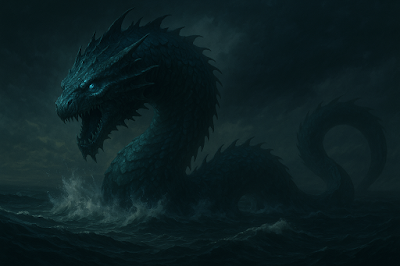
The Loch Ness Monster is a legendary aquatic creature said to inhabit Loch Ness, a massive freshwater lake in northern Scotland. The most common descriptions depict it as a large, long-necked creature, similar to a plesiosaur, a prehistoric marine reptile thought to have gone extinct 65 million years ago. Witnesses often describe a creature with one or more humps, a serpentine body, and the ability to swiftly submerge into the loch.
Nessie is one of the most famous examples of a cryptid—a creature whose existence is suggested but not confirmed by science. The mystery surrounding it has sparked decades of speculation, research, and storytelling.
Origins: Where Did the Legend Begin?
The earliest known mention of a creature in Loch Ness dates back to 565 AD in the biography of Saint Columba, written by Adomnán. According to the account, Columba saved a man from a “water beast” in the River Ness by invoking God’s name. The creature reportedly fled, terrified.
However, the modern Nessie phenomenon began in 1933 when a couple claimed to see a huge animal rolling and plunging on the surface of the water while driving along the loch. The story captured media attention, and Nessie became a global sensation.
In 1934, the infamous "Surgeon’s Photograph"—an image appearing to show a dinosaur-like head and neck—was published in the Daily Mail. It wasn’t until 1994 that the photo was confirmed to be a hoax involving a toy submarine. Yet, despite the debunking, the legend had taken root in the public imagination.
The monster has become a symbol of Scottish folklore, and sightings continue to this day, with hundreds of reported encounters over the past century.
Could a Creature Like Nessie Adapt to Loch Ness?
For Nessie to survive in Loch Ness, it would need to adapt in ways that allow it to thrive in a cold, dark, and deep freshwater environment. Loch Ness is approximately 36 kilometers long, 1.5 kilometers wide, and over 220 meters deep at its deepest point. The loch contains more freshwater than all the lakes in England and Wales combined, making it vast and secluded enough for a large creature to hide.
Key Adaptation Requirements:
1. Low Light Adaptation: Loch Ness has low visibility due to its peat-stained water. Any creature living here would need excellent low-light vision or echolocation.
2. Cold Water Physiology: The waters remain cold year-round. A surviving creature would need to be either cold-blooded and slow-metabolism or have insulation, much like marine mammals.
3. Stealth and Sensory Skills: It would require an evolved stealth behavior and possibly bioelectric senses, like those seen in electric eels, to navigate, hunt, and avoid human detection.
4. Diet and Ecosystem: To sustain itself, Nessie would need a consistent food supply, potentially preying on fish like trout and char, or scavenging like some aquatic reptiles.
5. Breeding: If not alone, a population of such creatures would need a reproductive system that allows for infrequent breeding cycles in a low-density population.
These ideas are speculative, but they form the basis of many cryptozoological hypotheses on how Nessie might exist undetected.
Is the Loch Ness Monster Still Alive?
The question on everyone’s mind: Is Nessie still out there? Despite extensive searches, nothing conclusive has ever been found, but there is a growing pile of anecdotal and technological evidence that keeps the mystery alive.
In 2018, an international team of scientists led by Prof. Neil Gemmell from New Zealand conducted an environmental DNA (eDNA) analysis of Loch Ness. The project aimed to collect and analyze water samples to find traces of any living organisms. While the study found no evidence of plesiosaur DNA or any large reptiles, it did uncover an unusually high concentration of eel DNA.
This led to the popular theory that many Nessie sightings might actually be due to giant eels, possibly mutated or genetically distinct. However, this theory doesn’t fully explain reports of large humps, long necks, or fast surface movements.
Furthermore, sonar scans have occasionally picked up large, unexplainable objects in the loch, and drone footage in recent years has reignited the debate. With modern AI and imaging technology being deployed, the search continues with new hope.
Nessie and Electric Eel: An Unusual Link
At first glance, Nessie and the electric eel have little in common. But biologically, there is an interesting parallel. Electric eels use electrogenesis—they generate electric fields to detect prey and navigate murky waters.
Given Loch Ness’s poor visibility, some scientists have hypothesized that a creature like Nessie could have evolved similar electroreceptive abilities, especially if it is an apex predator. This might also explain the rarity of sightings—if the creature can sense boats or humans and remain hidden.
Also, a creature that could generate low-level electromagnetic pulses might interfere with sonar readings, giving inconsistent data—something researchers have frequently encountered.
While this connection is largely theoretical, it shows how modern biology and evolutionary science are being used to reframe how we think about mythological creatures.
Leviathan and Nessie: Myth Meets Modern Mystery

The Leviathan is a sea monster mentioned in the Bible and other ancient texts. It is often described as a massive, fearsome creature capable of causing chaos in the oceans.
Though the Loch Ness Monster is rarely associated with destruction, it shares many qualities with Leviathan:
Gigantic and elusive
Inspires fear and wonder
Difficult to categorize in scientific taxonomy
Nessie could be seen as a modern cultural Leviathan, representing humanity’s timeless fascination with what lies beneath. Both creatures highlight our need for mystery in an increasingly explained world.
The Leviathan-Nessie comparison is more metaphorical than scientific—but it strengthens the emotional and mythical value Nessie holds for so many people.
Are Scientific Studies Still Going On?
Yes, scientific interest in Nessie is very much alive. Some of the most notable explorations include:
1. Operation Deepscan (1987):
A massive sonar sweep across the loch using 24 boats equipped with sonar equipment. It detected several large, moving underwater targets, but none were conclusively identified.
2. BBC Investigation (2003):
The BBC used 600 sonar beams and satellite tracking. The team found no signs of a large creature but acknowledged that many parts of the loch remained unexplored.
3. eDNA Project (2018):
As previously mentioned, this cutting-edge study found no plesiosaur DNA, but significant eel DNA, opening new avenues for exploration.
4. Ongoing Efforts:
New sonar mapping, AI-driven underwater drones, and crowdsourced video evidence continue to feed the investigation. Several universities and private research groups remain interested in the Nessie phenomenon.
Scientists are less focused on proving Nessie’s existence and more interested in how and why people continue to believe, making it an intersection of biology, psychology, and folklore.
Where Could Nessie Be Hiding Today?
If Nessie exists, here are the most likely hiding spots:
1. The Abyssal Zones of Loch Ness
At over 220 meters deep, Loch Ness has regions rarely touched by light or sonar. These depths are ideal for a reclusive creature.
2. Undiscovered Caverns or Caves
Geological surveys suggest the possibility of underwater caves beneath the loch. These could be hidden dens for a breeding population.
3. River Networks Leading to the Sea
Some theories suggest Nessie may not be a permanent resident of Loch Ness. The loch connects to the sea via the River Ness and Caledonian Canal, making migration possible.
4. Beneath Sediment Layers
Thick layers of silt and organic matter coat the loch’s bottom. Advanced scanning tools have picked up strange formations beneath this layer.
While speculative, these theories highlight that much of Loch Ness remains a mystery itself.
Conclusion: The Everlasting Legend
The Loch Ness Monster isn’t just a creature—it’s a symbol of mystery, exploration, and belief. It represents that rare part of our world where the unexplained still exists. Despite scientific skepticism, Nessie continues to inspire the curious, the dreamers, and even the researchers.
Whether she’s a surviving plesiosaur, a giant eel, or a product of collective imagination, Nessie remains very real in cultural memory. And as long as there are lakes, legends, and people willing to wonder, the Loch Ness Monster will never truly disappear.
So the next time you find yourself near a misty lake, peer into the deep. You might just see a ripple... or something more.

.webp)
Comments
Post a Comment