Cretaceous Period: The Throne of Giants and Evolution’s Boldest Experiments
The Cretaceous Period, stretching from about 145 million to 66 million years ago, was one of the most fascinating chapters in Earth’s history. Popular imagination often reduces this era to the reign of dinosaurs like Tyrannosaurus rex and Triceratops, but the truth is far more captivating. This was a time when life experimented on every front—on land, in the oceans, and in the skies. From giant reptiles to towering plants, from monstrous marine predators to fragile first flowers, the Cretaceous was truly Earth’s throne of giants and boldest experiments in evolution.

What Was the Cretaceous Period?
The Cretaceous was the last period of the Mesozoic Era, following the Jurassic and preceding the Paleogene. Its very name comes from the Latin creta, meaning chalk, because of the extensive chalk deposits formed during this time. But beyond geology, this period is remembered as the final golden age of reptiles and the dawn of new life forms that would shape the modern world.
Landscapes and Ecosystems
Imagine vast forests filled with towering conifers, cycads, and the first flowering plants that spread rapidly, changing ecosystems forever. The climate was warm, sea levels were higher than today, and shallow seas covered large parts of the continents. These seas connected ecosystems, making the Earth a global laboratory of evolution. The air buzzed with giant flying reptiles, the seas churned with massive predators, and the land roared with the footsteps of colossal dinosaurs.
Dinosaurs: The Dominant Land Giants
No discussion of the Cretaceous is complete without dinosaurs. From the infamous Tyrannosaurus rex to the three-horned Triceratops, the Cretaceous produced some of the largest and most iconic species. Yet dinosaurs were more than just fearsome predators:
Hadrosaurs (duck-billed dinosaurs) lived in herds, grazing like cattle.
Ankylosaurs, armored and equipped with tail clubs, defended themselves against predators.
Sauropods like Argentinosaurus stretched over 100 feet, ruling the plains as gentle herbivores.
But dinosaurs were not alone in this throne of giants.
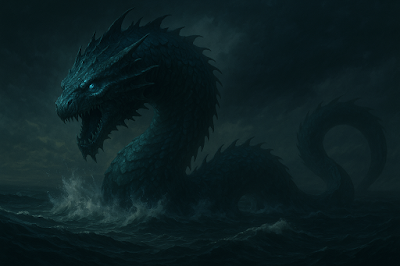
Ocean Monsters: More Fearsome than Dinosaurs?
If land belonged to dinosaurs, the oceans were ruled by marine reptiles that were arguably even more terrifying:
Mosasaurus, a 50-foot-long predator, was the apex hunter of the seas.
Plesiosaurs with their long necks swam gracefully but hunted with deadly precision.
Xiphactinus, a giant predatory fish, swallowed prey nearly its own size.
Squids and ammonites grew large, filling oceans with bizarre shapes.
For any creature that entered the waters, survival was uncertain.
Masters of the Skies
The skies of the Cretaceous were no less dangerous:
Pteranodons, with wingspans over 20 feet, soared above coastlines.
Quetzalcoatlus, the largest flying creature ever, rivaled a small airplane in size.
These giants dominated the air, hunting fish, small dinosaurs, and carrion.
Evolution’s Boldest Experiments: Plants and Insects
The Cretaceous wasn’t only about monstrous reptiles—it was also the time when plants began to redefine ecosystems. For the first time, flowering plants (angiosperms) appeared and spread across continents. This revolution in plant life brought new food sources and new ecological niches.
Alongside them, insects diversified rapidly, with bees, butterflies, and ants beginning to evolve, paving the way for pollination-driven ecosystems that continue to this day.
Why Was the Cretaceous Different from Other Periods?
Unlike earlier geological periods:
It had the highest sea levels in Earth’s history.
It saw both the peak and fall of the dinosaurs.
It introduced flowering plants, forever transforming landscapes.
Marine and aerial ecosystems became as diverse as land-based ones.
In short, the Cretaceous was the most famous and transformative period because it ended with Earth’s most dramatic mass extinction.
More Dangerous than Dinosaurs?
While T. rex might symbolize danger, creatures like Mosasaurus and Quetzalcoatlus were arguably more fearsome. In the oceans, survival odds were slimmer due to predators that hunted anything, including each other. On land, heavily armored herbivores showed that survival wasn’t just about size, but about innovation in defense.
Human Survival in the Cretaceous: A Thought Experiment
If a human were suddenly transported into the Cretaceous, survival would be nearly impossible:
On land, predators like T. rex or packs of raptors would endanger every step.
In forests, poisonous plants and insect-borne diseases would be deadly.
In the seas, a human wouldn’t last minutes against Mosasaurus or giant sharks.
At best, with luck and shelter, a human might survive for a few days to weeks, but the ecosystem was designed for giants, not fragile primates.
The Catastrophe: End of the Throne
About 66 million years ago, the Cretaceous ended in a cataclysm. A massive asteroid struck near modern-day Yucatán, Mexico, triggering wildfires, tsunamis, and a global climate collapse. Around 75% of all species vanished, including the non-avian dinosaurs.
But not everything died:
Birds, descendants of small theropod dinosaurs, survived and flourished.
Mammals, small and adaptable, endured and rose to dominance.
Many plants and insects persisted, laying the foundation for modern ecosystems.
Legacy of the Cretaceous
The Cretaceous remains the most famous geological period not only because it hosted the largest giants but because it marked the great transition from reptiles to mammals, from conifers to flowering plants, from one world to another. It was the age where life was bold, diverse, and constantly pushing boundaries.
Final Thoughts
The Cretaceous Period truly deserves the title “The Throne of Giants and Evolution’s Boldest Experiments.” It was an age of extraordinary life forms, breathtaking ecosystems, and evolutionary turning points. From monsters of the deep to rulers of the sky, from colossal dinosaurs to delicate flowers, it was a period where Earth was alive with unimaginable diversity.
And though it ended in tragedy, its legacy continues to shape the living world around us today.
If you want to know more more about prehistoric mystery then please go through my website:-
https://www.mystoverse.com

.webp)
Comments
Post a Comment