Congo Rainforest: Inside Earth’s Forgotten Prehistoric World

When people talk about rainforests, almost everyone imagines the Amazon. But deep in Central Africa, hidden behind thick green walls, lies a world far older, far wilder, far more mysterious. A world scientists still struggle to decode. A world where evolution moves in strange directions, where ancient species may still be alive, where tribes whisper stories of giant serpents and spirits that patrol the night. This is the Congo Rainforest, the second largest rainforest on Earth — and perhaps the most untouched prehistoric realm still surviving.
The Congo is not just a forest. It is a living time capsule. A place where the modern world ends abruptly, and something older — far older — begins.
The Forest Almost No One Talks About
Despite being the second largest rainforest after the Amazon, stretching across six countries — Democratic Republic of Congo, Republic of Congo, Cameroon, Gabon, Equatorial Guinea, and Central African Republic — very few people know anything about it. It covers 1.6 million square kilometers, yet remains one of the least explored ecosystems on Earth.
Why?
Because this forest does not allow easy entry. The Congo is layered in ways the Amazon never was. The trees form airtight canopies that block out the sun, rivers twist like serpents, swamps swallow entire vehicles, and humidity can choke even the strongest explorers. If Amazon is the “lungs of the planet,” the Congo is the deep heart — dark, ancient, and unforgiving.
Most satellite images fail to capture what is inside. Many areas are still completely unmapped. Even scientists admit they have seen only a fraction of its secrets.
A Biodiversity Giant That Hides More Than It Shows
Hidden under its green armor, the Congo is home to creatures found nowhere else on Earth. Western lowland gorillas, forest elephants, okapis (a relative of giraffes), hippos, bonobos — and countless species that haven’t even been scientifically documented.
Scientists believe that 60% of Congo species remain undiscovered. Why? Because the forest is so dense and dangerous that even basic biological surveys are impossible in many zones.
The trees rise like skyscrapers — some up to 200 feet tall, older than most civilizations. Vines wrap around trunks like muscles, and insectivorous plants thrive in the damp shadows, turning the forest floor into a silent battlefield of survival. Some of these plants belong to lineages that date back tens of millions of years. When you walk here, you walk inside evolution’s laboratory.
And the rivers — ah, the rivers.
They are some of the deepest and strongest on Earth.
The Congo River itself is the second deepest river in the world, reaching almost 220 meters (720 ft). That depth is enough to swallow whole buildings.
Scientists say the river system here hides aquatic species that we have never even imagined — because sunlight never reaches the bottom.
A Place Where Survival Is a Gamble
Imagine trying to walk across the Congo Rainforest. It sounds adventurous, maybe thrilling — but in reality, your survival probability drops to nearly zero.
Why?
Because the forest eats the unprepared.
The ground is muddy and unstable. There are marshes that can drown an adult in minutes, insect swarms that can raise your body temperature overnight, venomous snakes that blend into the leaves, and predators like leopards that silently track movements.
Even the air works against you. Humidity stays at nearly 100%, meaning sweat never evaporates. A single day of hiking feels like running a marathon underwater.
Survival experts say that crossing the Congo on foot could take months — and only if you have perfect navigation, supplies, and luck. Many areas have zero human presence, not because no one wants to go, but because no one can.
Tribes Who Live With Spirits, Shadows, and Giants
Within this ancient world live tribes whose cultures have remained almost untouched for centuries. The Pygmies, Bantu groups, and smaller tribal communities have lived here long before any foreign explorer arrived. Their knowledge of plants, animals, and forest sounds is unmatched.
But what makes the Congo even more mysterious are their beliefs.
Many tribes speak of massive serpent-like creatures living deep in the swamps.
They describe a snake that can swallow a crocodile whole, move silently through the rivers, and disappear without a trace.
Some tribes call it Mokele-mbembe — the “one who stops the flow of rivers.”
Western explorers have recorded these stories since the early 1900s. The descriptions sound strangely similar to a prehistoric creature — something like a surviving dinosaur.
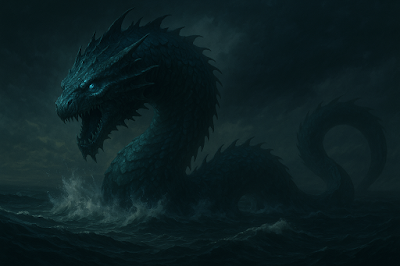
Another recurring belief is about giant serpents, far larger than any anaconda or python. Stories resemble the Titanoboa — a 42-foot snake that lived 58 million years ago. Scientists have never confirmed its existence in the Congo, but the perfect habitat, the perfect humidity, and the perfect river system make many wonder whether something similar could still survive in the dark corners of this forest.
To the tribes, these are not myths.
They are warnings.
They believe the forest protects itself — and that not everything inside it wants to be found.
Evolution Up Close: A Living Museum
What makes the Congo truly mesmerizing is that it feels untouched by time. If you want to see how Earth looked millions of years ago, you don’t need a time machine — you need the Congo.
The climate here has remained almost unchanged for tens of thousands of years. Ice ages came and went, civilizations rose and fell, continents shifted — but the Congo stayed nearly the same. This is why scientists call it a refuge for prehistoric evolution.
Many ancient species survived here long after disappearing elsewhere. Plant families from the dinosaur era are still alive. Giant insects thrive in the damp conditions. Fish species in deep rivers show primitive features rarely found anywhere else.
Walking in the Congo often feels like stepping backwards through time. Every sound, every shadow, every movement carries the weight of an ancient world still breathing.
.webp "Congo basin forest")
Mysteries That Defy Explanation
The Congo is filled with mysteries that modern science still can’t fully explain.
Entire regions flash with strange lights at night — unexplained bioluminescence or chemical reactions? We don’t know.
Massive tunnels have been found in remote zones that look carved by something large - but no known animal fits the size.
Even the forest structure itself is strange. Some areas have trees growing in near-perfect geometric patterns, as if shaped by some unknown natural mechanism.
The swamps are even stranger. The Likuela Swamp region has been rumored to hold massive creatures, unusual vibrations in water, and patterns of movement detected by locals that do not match hippos or crocodiles.
To this day, no exploration team has fully mapped or studied these areas.
A Prehistoric World Connected to Our Planet’s Past
What connects the Congo to prehistoric Earth is not just appearance — it is continuity.
The Congo Basin is one of the few places on Earth that has remained ecologically stable since the Miocene era, meaning species evolved here in slow, isolated ways.
The forest floor is covered in plants whose ancestors once fed dinosaurs.
The river systems carry genetic lineages older than human civilization.
The insects resemble species found in fossil records.
This forest is not just old — it is deep-time old.
Scientists believe that if intelligent humans had never evolved, Earth would still look like the Congo in many regions. In a way, the Congo is a glimpse into the untouched version of our planet — the version before humans changed everything.
Why the World Needs the Congo Rainforest
Despite its mystery, silence, and dangers, the Congo Rainforest is one of Earth’s most important ecosystems. It absorbs billions of tons of carbon, stabilizes rainfall across Africa, feeds the Congo River — the lifeline of millions — and protects species that exist nowhere else.
But unlike the Amazon, the Congo does not receive global attention. Some parts face mining, deforestation, and conflict. If this forest disappears, an entire prehistoric world will vanish — one we never even fully discovered.
Saving the Congo means saving a living chapter of Earth’s ancient story.
A Forest That Refuses to Reveal Its Secrets
The Congo Rainforest is not a place you conquer. It is a place that allows you to enter only if it wishes. Science tells us what we see. But tribes tell us what we don’t. And both agree on one thing:
The Congo is the last great mystery of our planet.
A world where evolution hides in shadows.
A world where ancient creatures may still roam.
A world older than human memory.
A world that might outlive us all.
If the Amazon is famous, the Congo is legendary.
If the Amazon is science, the Congo is mystery.
And if the Amazon is the future, the Congo is our past — still alive, breathing, and watching.
If you interested in science and environment and curious about space mystery then take look on this👇------- just go and grab the opportunity

.webp)
Comments
Post a Comment